Smart Parking
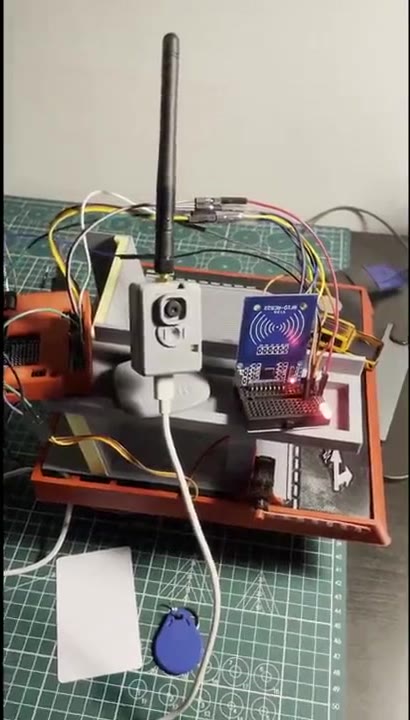
My diploma project, documented: what it does, how it is built, how it is tested, and what comes next. A car park gate that checks the driver, holds a bay, and guides the car into it. Built and tested on a 3D-printed scale model with one gate and two bays.
automated checks159 passing
firmware2.0.0
firmware 2.0.0 on the modelnot yet flashed
outdoor accuracynot measured
What it does
- Checks one driver up to three ways. The driver taps a card; a camera reads the number plate and, where it is allowed, the face. All of them must belong to the same registered person within 30 seconds. A real card in the wrong car is refused.
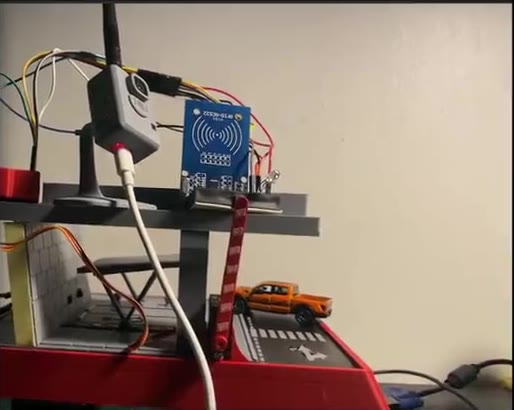
- Holds a bay before the barrier lifts. Sensors in each bay report whether it is free. If no bay the driver may use is free, they are told at the barrier instead of circling inside. Accessible bays go only to permit holders.
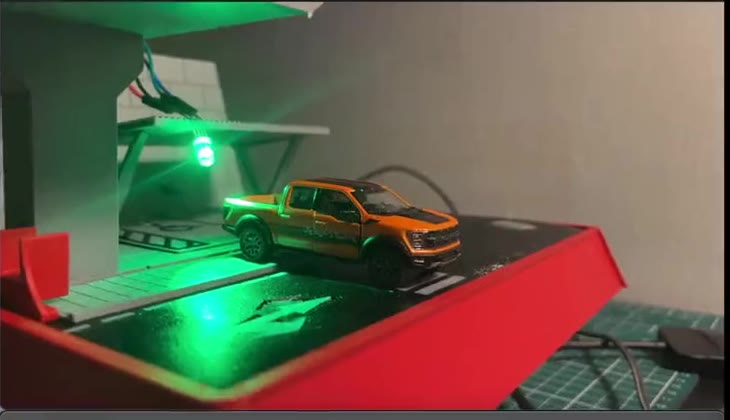
- Guides the car in. As the car reverses, two sensors watch the gap behind it and the bay light goes green (keep going), orange (slow down), red (stop).
Every decision is written to a record that shows any later edit. Nothing needs the internet to decide.
Project status
| Part | State | Evidence |
|---|---|---|
| Scale model (gate, camera, two bays) | Built | Bench recording, June 2026 (stills) |
| Site software (Python) | Rebuilt, tested | 43 automated checks |
| Gate and bay firmware 2.0.0 | Written, laptop-tested | 78 logic checks; the real sketches run against the site software over a serial device. Not yet flashed to the model. |
| Camera firmware | Updated, compiles | Wi-Fi reconnect added, credentials moved out of the sketch. Not yet flashed. |
| Operator console and driver display | Working | Live demo; 38 checks on its engine |
| Plate and face reading outdoors | Not measured | The first job of a pilot |
Where to go next
Live demoThe operator console against a simulated gate, in your browser.
How it worksParts, decision rules, serial protocol, the record.
HardwareParts list, wiring, flashing and bench tests.
Testing and statusWhat is tested, how, and what is not proven yet.
Background
The first build was my diploma course project at the University of Technology and Applied Sciences, Muscat. It won Diploma Best Project Idea at the UTAS Muscat Poster Day in April 2026. Since then I audited that build, found 30 defects, and rebuilt the software and firmware. The roadmap covers the path from the model to a real entrance.